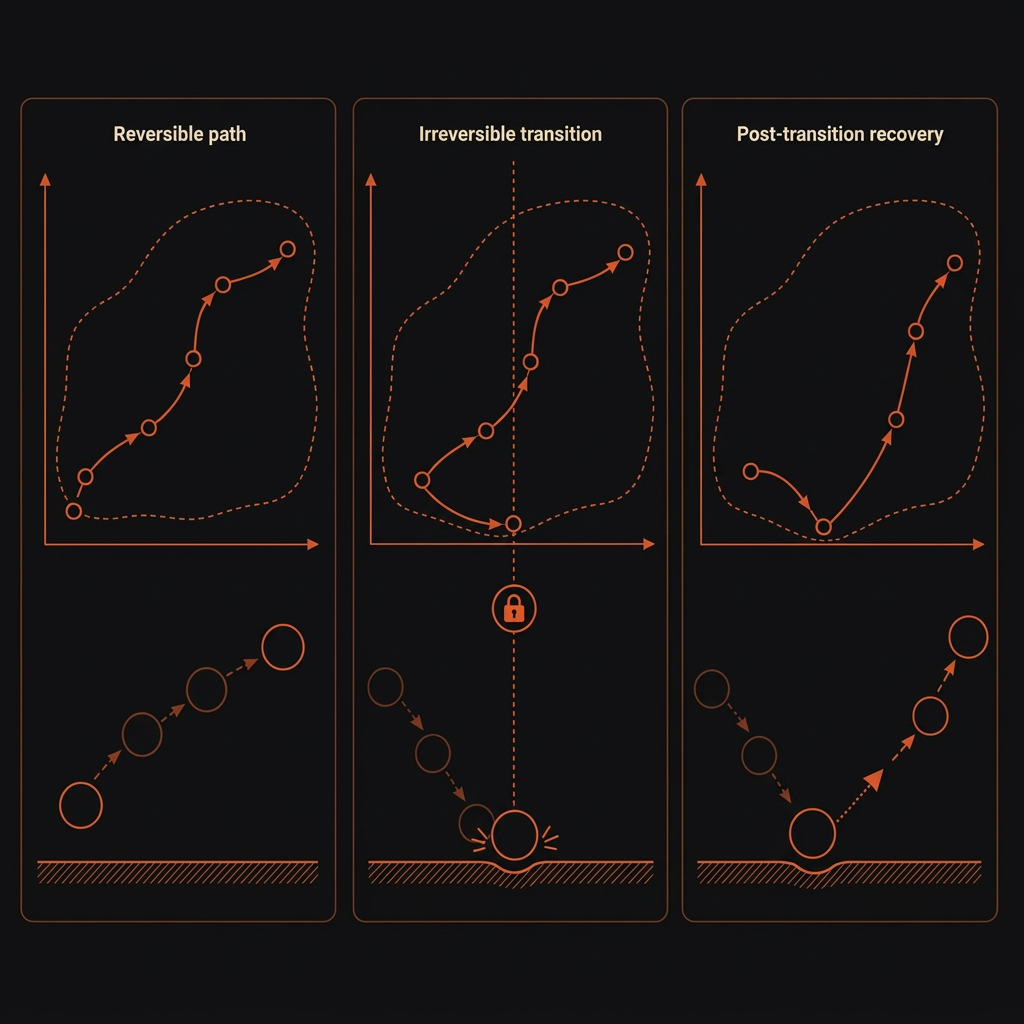
A stated expectation, locked in
Before the machine acts, it records what it expects the action to produce in tamper-evident form, so it can't be rewritten afterward to match whatever happened. No committed expectation, no action.
CommitmentTechnology
Most safety systems decide whether a machine may act. This goes one step further: the machine puts its expectation on the record before it moves, and is then held to that record by what it actually measures.
Before the machine acts, it records what it expects the action to produce in tamper-evident form, so it can't be rewritten afterward to match whatever happened. No committed expectation, no action.
CommitmentAs the action unfolds, the machine measures what is physically happening and compares it, in the moment, against the expectation it committed to. When the two diverge beyond tolerance, it stops.
MeasurementEvery action, and every refusal, produces a sealed record linked to the original expectation. An outside party can confirm what was promised and what occurred without trusting the maker.
Evidence